77
For the better part of a decade, the narrative surrounding the zero-emission transition felt completely settled. Battery electric vehicles had won the consumer market, captured venture capital, and dominated policy discussions. Hydrogen fuel cells, by contrast, were frequently relegated to punchlines by Silicon Valley executives or dismissed by critics as an over-engineered relic of a bygone automotive era. The consensus was clear: passenger vehicles would run on lithium-ion cells, while hydrogen, if it survived at all, would be cordoned off in heavy maritime shipping or remote industrial manufacturing.
Yet over the past two years, the conversation on automotive propulsion has quietly shifted. Automotive boardrooms and energy planners are taking a hard second look at hydrogen fuel cell electric vehicles. Rather than mounting a noisy, head-to-head campaign against battery power, hydrogen is staging a measured, pragmatic return. This resurgence is not fueled by speculative hype, but by hard engineering limits, grid capacity constraints, and a growing recognition that a single clean technology cannot address every consumer driving pattern.
The Cracks in the Battery-Only Monoculture
The initial rush to electrify personal mobility operated on an assumption of frictionless scaling. Millions of battery electric vehicles would plug into municipal grids, chargers would effortlessly proliferate along major highways, and battery chemistry would continuously leap forward in energy density and speed.
While battery electric cars have made astonishing progress and remain an excellent solution for millions of suburban drivers, real-world deployment has surfaced stubborn logistical hurdles. Peak electrical demand is emerging as a genuine operational barrier in dense urban centers and older power grids. Transformer upgrades take years to permit and execute, and the capital expenditure required to install dozens of 350-kilowatt fast chargers at every highway exit across North America is proving staggering.
Consumer realities are adding friction to the ownership experience. Winter range degradation remains a persistent headache for drivers across northern states, where sub-zero temperatures routinely slash lithium-ion range by a third or more. Drivers who lack dedicated off-street parking or private garages find themselves tethered to inconsistent public charging corridors, often battling broken stalls, opaque network subscriptions, and lengthy queues.
These pain points have forced industry planners to acknowledge an uncomfortable truth: relying exclusively on one energy vector creates dangerous systemic bottlenecks. Passenger transportation needs redundancy, and hydrogen offers an inherently complementary physics profile.
The Heavy-Duty Spillover Effect
Passenger hydrogen cars originally struggled because they bore the entire financial weight of creating an infrastructure network from scratch. Asking retail drivers to buy a vehicle that depended on a fragile, localized patchwork of boutique fueling stations was an impossible retail pitch.
The current hydrogen revival operates under a radically different playbook. The physical backbone is being underwritten by heavy-duty commercial transport.
Long-haul Class 8 trucks, regional delivery fleets, transit buses, and port drayage machinery cannot afford the structural penalties of massive battery packs. A battery capable of hauling 80,000 pounds of freight across mountain passes eats into legal payload weight and requires multi-hour charging stops that decimate freight logistics. Commercial fleet operators are turning heavily toward hydrogen to maintain rapid turnaround times and route predictability.
As hydrogen supply corridors, regional clean hydrogen hubs, and high-capacity liquid pumping stations materialize along interstate freight routes, passenger fuel cell vehicles no longer need to justify infrastructure costs in isolation. Passenger cars can now draft behind commercial logistics, tapping into the same supply pipelines and industrial-grade distribution networks that keep interstate freight moving.
The Architecture Evolution: Enter the Plug-In Fuel Cell
Early hydrogen cars demanded total commitment from the driver. You bought a vehicle that ran solely on compressed hydrogen, meaning every mile driven relied entirely on proximity to a specialized hydrogen dispenser. If the local station went offline or suffered a pressure loss, the driver was stranded.
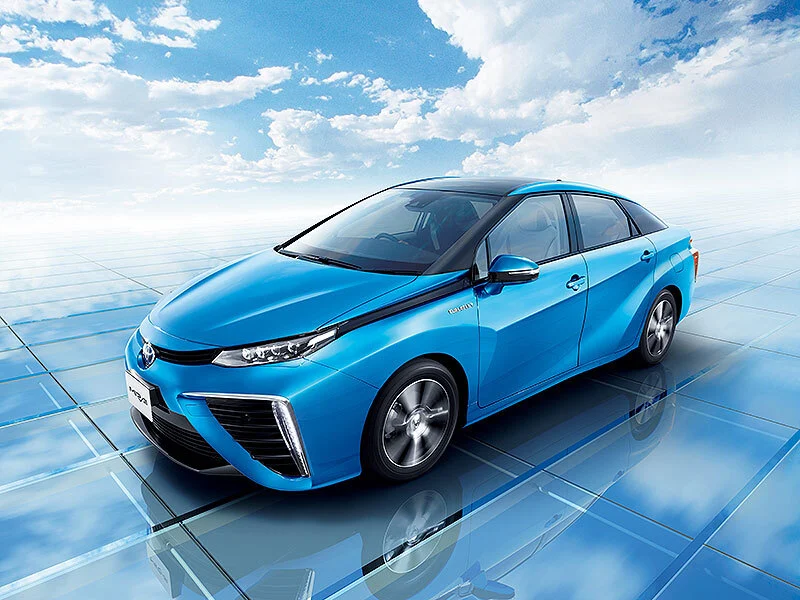
Automakers have recalibrated their engineering approach to solve this dilemma. The most compelling modern fuel cell vehicles are adopting a bimodal plug-in hybrid architecture.
Instead of choosing strictly between a plug or a pump, these vehicles feature a mid-sized lithium-ion battery alongside high-pressure hydrogen storage tanks. For daily commutes, grocery runs, and urban errands, the car functions exactly like a standard plug-in electric vehicle, recharging overnight from a standard wall outlet or home charger. The onboard fuel cell stack acts as an on-demand, zero-emission range extender for weekend road trips, regional travel, or heavy towing.
This hybrid approach shifts the entire consumer value proposition. Drivers are no longer trapped if their neighborhood lacks a hydrogen station. They can cover 80% of their annual mileage using household electricity, while reserving hydrogen refueling for longer highway journeys. Crucially, this setup slashes regular demand on public hydrogen pumps, allowing existing fueling stations to serve far more motorists without forming lines.
Strategic Automaker Alliances and Manufacturing Scale
Behind the scenes, some of the world’s most disciplined automotive manufacturers refused to shelve their fuel cell research. Instead of treating fuel cells as a speculative side project, companies like Toyota, BMW, Honda, and Hyundai maintained steady, patient development programs.
Rather than competing individually, legacy automakers are increasingly pooling capital and technical capabilities. Toyota and BMW have deepened their long-standing partnership to co-develop next-generation fuel cell powertrains, sharing components to achieve manufacturing economies of scale. Honda and General Motors established advanced joint manufacturing operations in North America to mass-produce durable, lower-cost fuel cell stacks for commercial and consumer applications.
These collaborative efforts have yielded massive improvements in core hardware:
-
Platinum loading reduction: Modern fuel cells use a fraction of the precious metals required by early prototypes, dramatically lowering raw material expenses.
-
Component miniaturization: Stacks are now compact enough to slip into conventional engine bays and skateboard architectures without eating up cabin room or cargo capacity.
-
Cold-weather cold-starts: Modern systems operate reliably well below freezing, resolving historical cold-weather ignition issues.
-
Durability milestones: Heavy-duty testing cycles have elevated passenger fuel cell longevity past 150,000 operational miles with negligible output loss.
By standardizing balance-of-plant components and spreading production costs across commercial trucks, stationary power units, and passenger platforms, automakers are systematically addressing the cost disadvantages that once made hydrogen vehicles non-viable.
Energy Storage, Grid Balancing, and Renewable Curtailment
The renewed interest in hydrogen cars cannot be decoupled from macro-level energy transition challenges. As wind and solar installations account for a growing share of global electricity generation, utilities face the chronic problem of renewable curtailment. During sunny afternoons or windy nights, renewables frequently generate far more power than regional grids can consume, forcing operators to pay generators to shut down or ground the power.
Utility-scale battery banks can store several hours of excess energy, but they cannot realistically provide seasonal storage or buffer grids against extended weather anomalies. Hydrogen production via clean water electrolysis transforms wasted, excess renewable electricity into a transportable, storable chemical fuel.
In this context, the hydrogen car functions as part of a distributed, closed-loop energy economy. Surplus clean energy that would otherwise be discarded is captured as gaseous fuel, transported via pipelines or tube trailers, and dispensed directly into vehicles without stressing local electrical substations during peak evening hours. For utility operators struggling to manage grid stability, offloading transport energy demands to decoupled chemical fuels is an increasingly attractive prospect.
The Refueling Experience and Fleet Usability
The core mechanical virtue of the fuel cell vehicle remains just as persuasive today as it was twenty years ago: three-to-five-minute refueling.
For fleet operators, taxi services, municipal emergency services, and rideshare drivers, time spent stationary at a charger represents lost income. Even the fastest direct-current chargers require twenty to forty minutes under ideal conditions to bring a battery to an 80% charge level, with charging speeds tapering sharply as the battery pack fills. In freezing conditions, that duration stretches further.
Hydrogen delivers a refueling rhythm identical to the traditional internal combustion experience. The nozzle locks onto the vehicle’s high-pressure receptacle, the system pressure balances, and the tanks fill to full capacity within minutes regardless of ambient temperature. For drivers who do not possess a dedicated driveway, those living in dense multifamily apartment buildings, or fleets running multi-shift continuous operations, this convenience remains an unmatched functional advantage.
Navigating the Remaining Hurdles
Acknowledging hydrogen’s quiet comeback does not mean overlooking its remaining challenges. The road ahead remains complex and demands disciplined execution.
Fuel distribution cost remains the steepest mountain to climb. The cost of delivered retail hydrogen in select pioneer regions has historically been too high, driven up by small-batch trucking and retail pump compression quirks. Transitioning from carbon-intensive “gray” hydrogen derived from steam-methane reforming to truly clean “green” hydrogen produced via renewable electrolysis requires substantial capital deployment and pipeline integration.
Reliability at public retail dispensers also requires dramatic operational maturity. Early consumer stations suffered frequent sensor faults, freezing nozzles, and pressure lag times that frustrated early adopters. Commercial-grade operators entering the market today must treat uptime with the same rigorous standard seen at traditional gasoline and diesel retail plazas.
A Balanced Multi-Pathway Mobility Future
The narrative surrounding clean transportation is finally maturing past simplistic, winner-take-all tribalism. Battery electric vehicles have proven their worth and will undoubtedly remain the primary powertrain for the vast majority of consumer passenger cars.
However, universal electrification cannot be solved with a single tool. For cold climates, heavy towing, long-range regional travel, high-mileage commercial fleets, and drivers locked out of residential charging access, hydrogen provides an indispensable, zero-emission alternative.
By merging the daily convenience of plug-in batteries with the rapid refueling and energy density of compressed hydrogen, modern fuel cell vehicles are carving out a resilient, permanent niche. It is not a sudden revolution, nor an aggressive displacement of battery electrics. It is a calculated, pragmatic evolution—and that quiet resilience is precisely why hydrogen is here to stay.
